Q: Our lawn took a beating this summer. I was thinking that I should plant a cover crop of grass seed this fall so that it could start growing in the spring. Would that work? I have a pretty big area to cover.
A: It could work, but you should plant those seeds much later in the fall. You want those seeds to stay dormant until spring, so plant them when the weather is already cold and will stay cold. You can even spread the seeds on top of snow, but you don't get good seed-to-soil contact that way. If you are growing a bluegrass, fescue or ryegrass lawn, right now is the best time of year to plant the grass seed.
The following is an excerpt from "Greener View Gardening," my book available on Amazon. It covers all aspects of taking care of lawns, trees, vegetables, houseplants and many other topics, covering planting and growing healthy plants.
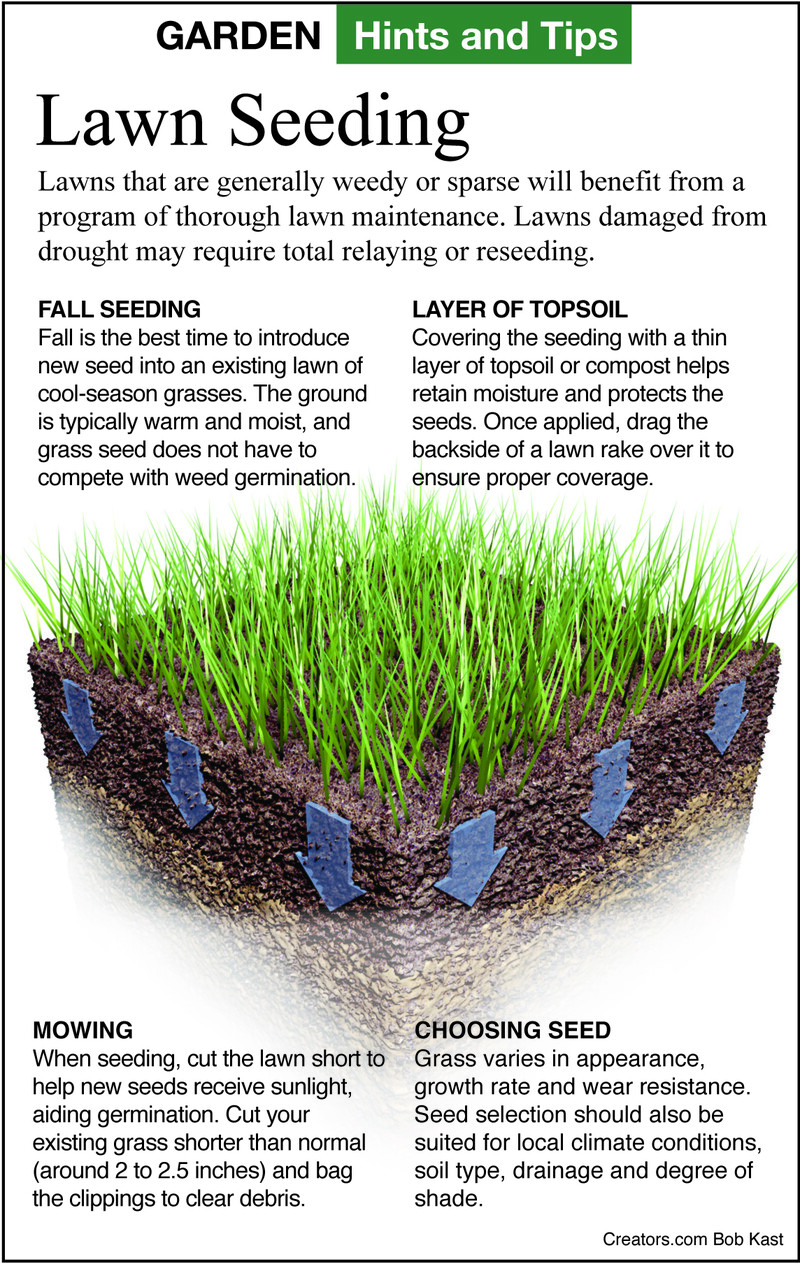
For cool season grasses, fall is the best time to install a new lawn or renovate an old one. There will be three consecutive cool seasons: fall, winter and spring, before the warm season of summer.
Start by spraying weeds in late summer to have the area ready for seed or sod. Warm days, cool nights and the expected rainfall favor cool season lawn grass growth. Fewer weeds sprout in the fall, offering less competition in seeded lawns. The success of a lawn started in the fall depends on what kind of weather there is later in the fall or winter, so the earlier you start, the better.
The second-best time to plant grass is early to mid-spring. A hot, dry summer and more weeds make establishing a spring lawn a little harder.
If you need to renovate a portion of your lawn, it is wise to determine the reason for the original problem. Plants may decline in health due to improper or a lack of care, too much shade, insect and disease damage, and adverse environmental conditions. Once you have identified the cause (or causes), change your cultural practices to prevent repeating the damage. If necessary, change the type of grass to one that is more tolerant of the condition (shade tolerance, for example).
The basic process for installing a lawn is the same whether you want to seed, sod, start a new lawn or renovate an old one. Sod is nothing more than one and a half to two-year-old seed. Can your seeded lawn look like sod in that short of a timespan? It can if you do what the sod growers do.
They keep the plants out of stress as much as possible. They monitor water, fertility, insects, disease, soil compaction and anything else that may arise during the years they care for the grass. That is why, even though the soil preparation on your property is the same, a sodded lawn will cost three to 10 times more than a seeded lawn.
The benefits of installing sod often outweigh the higher initial cost. It can be installed anytime water is available and the ground isn't frozen. The lawn will be usable within weeks, not months. It uses less water to become established and prevents soil erosion more quickly than seed.
DIST. BY CREATORS.COM







View Comments